

- January 12, 2026
- No Comments
Should I Take Calcium and Vitamin D Supplements for My Bone Health?
Calcium deficiency is one of the most common yet most misunderstood nutritional problems in routine clinical practice. Patients frequently present with joint pain, muscle aches, back pain, fatigue, or early bone loss and confidently state that their “calcium levels are normal.” This reassurance is misleading.
Both patients and general practitioners often equate normal serum calcium with adequate calcium intake and good bone health. This assumption is scientifically incorrect and can delay the diagnosis and prevention of osteoporosis and fractures.
This blog explains, in simple but evidence-based terms, why blood calcium levels are misleading, why daily calcium intake is far more important, how Indian dietary patterns contribute to deficiency, and how to choose calcium and vitamin D supplements rationally.
WHY SERUM CALCIUM DOES NOT INDICATE CALCIUM DEFICIENCY
Serum calcium is tightly regulated by the body because calcium is essential for survival functions such as heart rhythm, nerve conduction, muscle contraction, and blood clotting. Even a small fall in blood calcium can be dangerous.
When dietary calcium intake is low, the body compensates by increasing parathyroid hormone (PTH), which pulls calcium out of the bones to maintain normal blood levels. As a result, serum calcium remains normal while bones progressively lose calcium.
Therefore, a normal calcium report does not reflect dietary intake, absorption, or bone calcium stores. This is the most common misconception among patients and doctors alike.
THE REAL QUESTION: DAILY CALCIUM REQUIREMENT
A normal adult requires approximately 1000–1200 mg of calcium per day. However, most adults consume only 400–500 mg daily.
This chronic shortfall leads to silent bone loss over years, eventually presenting as osteopenia, osteoporosis, fractures, dental problems, muscle cramps, and chronic joint pain.
WHY INDIAN DIETS ARE LOW IN CALCIUM
Several factors contribute to low calcium intake:
- Diets rich in rice and chapati but poor in dairy
- Tea and coffee replacing milk
- Lactose intolerance fears
- Myths that dairy increases inflammation
- High cost of milk and paneer for many families
- Vegetarian diets with low bioavailable calcium
USE A CALCIUM CALCULATOR
The most practical way to assess calcium intake is by using a dietary calcium calculator.
International Osteoporosis Foundation (IOF) Calcium Calculator:
https://www.osteoporosis.foundation/educational-hub/topic/calcium-calculator
Most patients are surprised to discover their intake is well below recommended levels.
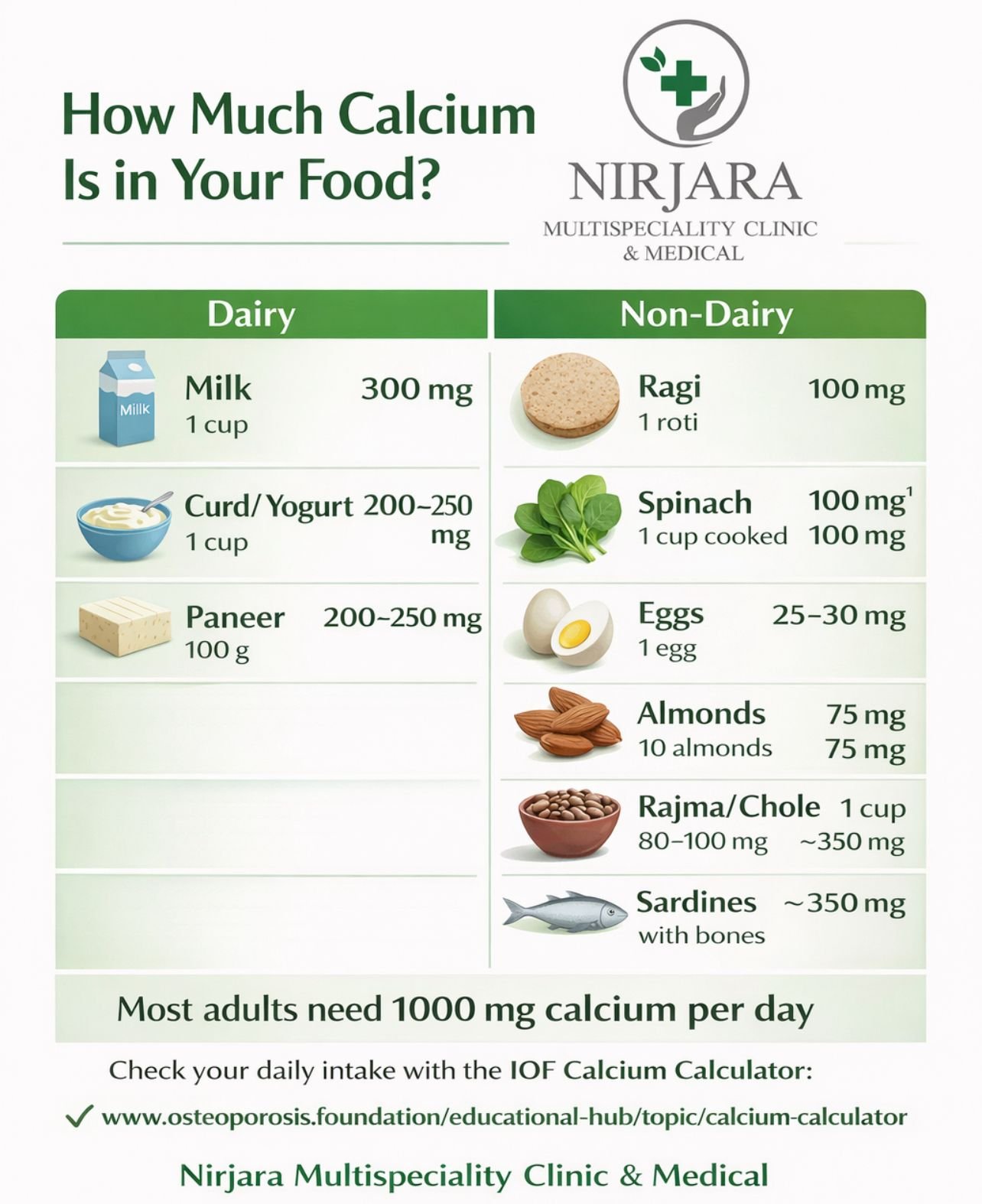
DAIRY VS NON-DAIRY CALCIUM SOURCES
Dairy sources:
- 🥛Milk (1 cup): ~300 mg
- 🍶 Curd/Yogurt (1 cup): 200–250 mg
- 🧀 Paneer (100 g): 200–250 mg
Non-dairy sources require unrealistic quantities:
- 🌾Ragi roti: ~100 mg per roti (10–12 needed daily)
- 🥬Spinach: ~100 mg per cup but poor absorption
- 🌰Almonds: ~75 mg per 10 nuts
- 🥚Eggs: ~25–30 mg per egg
- 🫘Rajma/chole: ~100 mg per bowl
ROLE OF VITAMIN D
Vitamin D is essential for calcium absorption from the gut. Vitamin D deficiency is extremely common due to indoor lifestyles and poor sun exposure.
Low vitamin D worsens calcium deficiency, accelerates bone loss, and contributes to muscle pain and weakness.
WHEN TO TAKE CALCIUM SUPPLEMENTS
Calcium supplements should be considered when:
- Daily intake is below 1000 mg
- Joint pain or bone pain is present
- Osteopenia or osteoporosis is diagnosed
- Long-term steroid use
- Autoimmune diseases
- Age above 40 years
- Pregnancy or lactation
- Vegan or low-dairy diets
- Vitamin D deficiency
CALCITRIOL: WHEN TO USE AND WHEN TO AVOID
Appropriate indications include:
- Chronic kidney disease
- Hypoparathyroidism
- Rare endocrine disorders
ROLE OF K2 AND MAGNESIUM
Vitamin K2 and magnesium are commonly marketed with calcium supplements. Current evidence does not support routine use in most patients.
They are generally safe but optional and not essential for bone health.
COMBINED SUPPLEMENTS
Calcium + vitamin D combinations are sufficient for most patients. More complex combinations are not superior and increase cost.
FINAL TAKEAWAY
- Serum calcium does not reflect bone health.
- Daily calcium intake and vitamin D status determine bone strength.
- Without dairy, dietary calcium targets are difficult to achieve.
- Supplements are safe, affordable, and often necessary.
- Rational prescribing prevents fractures and long-term disability.
CONSULTATION
For joint pain, osteoporosis, or calcium and vitamin D guidance:
Dr. Nilesh Nolkha
Senior Rheumatologist & Clinical Immunologist
Nirjara Multispeciality Clinic, Kandivali West, Mumbai